Cool Santa Design Review for Small Business Merch
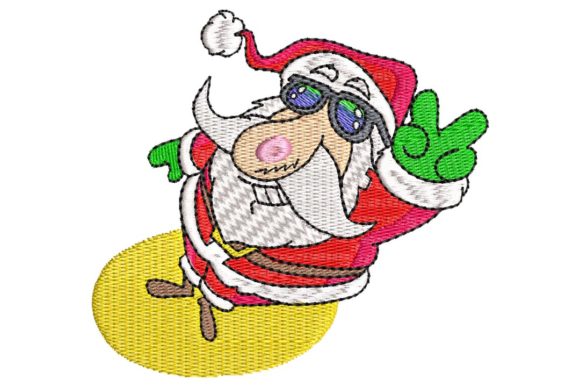
When I first opened the Cool Santa machine embroidery design, I was looking for a Christmas-themed piece that could work across multiple product types without feeling overly seasonal or kitschy. As an embroidery designer who has reviewed hundreds of digital embroidery files for small business merchandise, I know that the difference between a design that sells and one that sits on a shelf often comes down to how well it translates to real fabric, real branding, and real customer expectations. Cool Santa, based on the Hey Dude Merry Christmas Illustration by Ron Leishman, presents an interesting opportunity for apparel decorators, handmade brands, and Etsy sellers who want to offer something playful yet polished.
First Impressions and Visual Personality
Cool Santa strikes me as a friendly, approachable design with a hand-drawn feel that comes through from the Ron Leishman illustration style. It does not feel overly formal or corporate. Instead, it carries a relaxed, almost conversational energy that would suit a small café, a boutique gift shop, a creative studio, or a local bakery looking to add a touch of holiday cheer to their merchandise. The phrase "Hey Dude" in the title reinforces that casual vibe. For a small business owner, this design reads as warm and personable, not stiff or mass-produced. That is a valuable quality for custom apparel and handmade product branding where customers want to feel a connection to the maker.
From a professional standpoint, the design appears to have enough visual weight to hold its own as a standalone embroidered patch or a chest logo accent. The illustration style suggests moderate detail, which means it can work on medium to large surfaces without losing clarity. I would not call it minimal, but it is not overly dense either. It lives in that sweet spot where a design feels intentional without overwhelming the fabric. For a machine embroidery design meant for commercial embroidery projects, that balance is critical.
How Cool Santa Performs in Real Business Use
In my experience testing designs for small business merch, the real test is not how a file looks on screen, but how it stitches out on a cap front, a tote bag panel, or a work shirt pocket. Cool Santa, given its illustration-based origin, should translate well to embroidered patches if the stitch density is managed properly. For a local coffee shop wanting holiday aprons, or a florist adding a seasonal touch to their delivery bags, this design could work as a chest or sleeve accent. It also has potential for cap embroidery, provided the design is sized appropriately for the curved surface of a cap front.
For tote bag design, Cool Santa can serve as a central graphic that draws the eye without competing with the bag's structure. On apron embroidery, it could sit on the bib or lower pocket area, adding a smile without dominating the garment. For boutique merchandise like holiday gift sets or customer gifts, this embroidery file could be used on small accessory items like makeup bags, pencil cases, or even product packaging accents. Etsy sellers looking for digital embroidery file options for their shops will find that Cool Santa offers a recognizable holiday theme that still feels unique enough to stand out in a crowded marketplace.
Where I see the strongest business use is in limited-run seasonal merchandise for local businesses. A pet brand could use it on bandanas or tote bags. A handmade soap company could add it to a cloth bag or towel set. A creative studio could stitch it on hoodies for a holiday pop-up event. The design's friendly character makes it versatile across retail categories, as long as the brand identity supports a playful, casual tone.
Where to Use Cool Santa Carefully
As with any machine embroidery design, there are placement and scaling considerations that can make or break the finished product. Cool Santa, being an illustration with likely multiple outlines and fill areas, may not perform well at very small sizes. If you are planning to use it as a tiny patch on a collar or a small cap front, I recommend testing the design at your intended size before committing to production. Small patch sizes can cause detail loss, especially in the face and wording areas, if the design is reduced too much.
Curved surfaces like cap fronts and sleeve cuffs require careful hooping and stabilizer choice. If the design has high stitch density in certain areas, it may pucker on lighter fabrics or cause distortion on stretchy materials. I would also advise caution with dark uniforms. If the design includes light thread colors, make sure the contrast is strong enough to read from a distance. A test stitch-out on the actual fabric you plan to use is always the safest approach. For items that need frequent washing, such as staff aprons or work shirts, check the thread colorfastness and consider using a higher quality thread to avoid fading after repeated laundering.
Textured fabric, such as fleece, terry cloth, or heavily textured canvas, can obscure fine details in an embroidery design. If Cool Santa includes small lettering or thin lines, those elements may disappear into the fabric texture. In those cases, consider enlarging the design or simplifying the area with the most detail. For tote bags made from natural cotton or linen, the design should stitch cleanly with proper stabilizer support.
Brand Identity and Customer Trust
For small business owners, every embroidered item is a representation of their brand. Cool Santa, with its relaxed and friendly character, can reinforce a brand identity that values approachability, warmth, and handmade presentation. Customers who receive a product with a well-stitched embroidered patch or chest logo perceive higher quality and attention to detail. That translates to trust and repeat business.
However, the design must be executed well. A poorly stitched version of Cool Santa, with puckering, misaligned colors, or skipped stitches, will do the opposite. It will signal carelessness and reduce the perceived value of the product. This is why I always recommend creating a printable mockup for client approval before production. A mockup shows the client exactly how the design will look on their chosen garment or item, and it helps avoid surprises later. For Etsy sellers and handmade brands, mockups also serve as strong listing images that help buyers visualize the finished product.
Visual consistency across your product line matters. If Cool Santa is used on a cap, a tote bag, and an apron, the thread colors, placement, and sizing should feel cohesive. That consistency builds recognition and professionalism, even for a small operation. A customer who sees your brand on multiple items will start to associate the quality of the embroidery with the quality of your products overall.
Practical Embroidery Designer Notes
Before you commit to production with Cool Santa, here are some practical steps I recommend based on years of working with digital embroidery files. First, test the design in black and white on a scrap fabric to check the stitch quality and density. This will reveal any areas where the design may be too dense or too sparse.
Second, review the thread color contrast. If the design uses multiple colors, make sure they separate well visually. Low contrast between thread colors can make the design look muddy, especially on busy or patterned fabric. Third, inspect the spacing between elements. If any parts of the design are too close together, they may blend into a single blob when stitched at small sizes.
Fourth, confirm your hoop size can accommodate the design at your intended dimensions. If you are working with a small hoop, you may need to split the design or resize it. Always check the file format compatibility with your embroidery machine before purchase. The product description states that this machine embroidery design comes with multiple formats, but I advise verifying that your specific machine is supported.
Fifth, use the proper stabilizer for your fabric type. A tear-away stabilizer works for stable woven fabrics, while a cut-away stabilizer is better for knits and stretchy materials. A poor stabilizer choice can ruin an otherwise perfect stitch-out. Sixth, create a mockup for client approval. Even if you are the client, seeing the design on a realistic garment image helps you evaluate placement, size, and overall impact before you invest time and materials.
Finally, confirm the commercial licensing terms for Cool Santa before using it for business purposes. The design is based on an illustration by Ron Leishman, and while the product description notes it is a machine embroidery design, you must ensure that your intended use, whether for embroidered patches, custom apparel, or branded merchandise, is covered by the license. Do not assume that personal use terms extend to commercial embroidery projects. When in doubt, contact the seller directly.
Comparing Cool Santa to Other Design Assets
When I evaluate a design for a client's brand, I always compare it to their existing design assets. Cool Santa has a distinctive illustration style that may or may not align with a brand's visual identity. For a business that uses clean, modern typography and minimal graphics, this design may feel too playful. For a brand that already embraces hand-drawn or whimsical elements, Cool Santa will fit right in. If you are building a cohesive product line, consider how this design works beside your logo, your other embroidery files, and your packaging. Consistency across all design assets strengthens brand recognition and buyer engagement.
For handmade product sellers, the design's personality can be a selling point. Customers who buy handmade goods often appreciate the character and warmth that a illustrated design brings. Cool Santa, with its casual "Hey Dude" energy, feels like a design that was made by a person, not a corporation. That human touch matters in the handmade marketplace.
Final Thoughts on Cool Santa for Business Use
Cool Santa offers small business owners a friendly, holiday-themed embroidery design that can work across a range of merchandise, from embroidered patches and cap embroidery to apron decoration and tote bag design. Its illustration-based style gives it a handcrafted feel that aligns well with handmade brands, local shops, and creative studios. As with any machine embroidery design, the key to success lies in testing, proper stabilizer use, careful sizing, and commercial licensing confirmation. If you take the time to test the design on your actual fabric, review thread contrast, and create a mockup for approval, Cool Santa can become a reliable asset in your seasonal product lineup. For Etsy sellers, apparel decorators, and small business owners looking to add a touch of holiday cheer without sacrificing quality, this design is worth a closer look.