Cancer Survivor Ribbon Review for Small Business Merch
As a professional embroidery designer who has worked with hundreds of small businesses, I know the weight that a single design carries. When I first opened the Cancer Survivor Ribbon machine embroidery design, I was immediately struck by its balance of sensitivity and strength. This is not a generic awareness ribbon. It has a crafted, intentional feel that makes it suitable for everything from a boutique tote bag to a staff uniform patch. For any small business owner considering branded merchandise with a meaningful message, this design deserves a close look.
First Impression: Professional, Elegant, and Purposeful
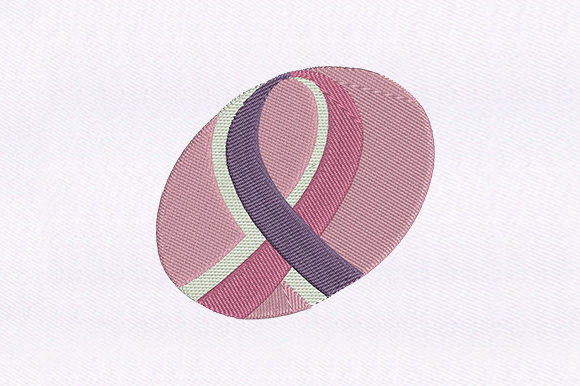
The Cancer Survivor Ribbon machine embroidery design reads as both refined and approachable. It avoids the overly decorative or cartoonish look that can undermine a professional brand. Instead, it presents a clean, classic ribbon form that feels respectful and timeless. The silhouette is well-proportioned, making it easy to integrate into a logo or use as a standalone accent. For a small business that wants to show support for survivors—whether through a café's coffee cup sleeve, a boutique's hang tag, or a handmade brand's patch—this design communicates care without being heavy-handed.
This design sits comfortably in the Awareness category, but it does not sacrifice aesthetic quality for message. It is versatile enough to work for a modern creative studio, a rustic bakery, a florist, or a pet store. The embroidery file formats offered—10O, ART, CND, DSB, DST, DSZ, EXP, HUS, JEF, PCS, PEC, PES, TAP, VIP, VP3, XXX—mean it is ready for nearly any commercial embroidery machine. That kind of accessibility is a huge plus for small business owners who may not have the most advanced equipment.
Embroidered Patches and Uniforms
For a small business producing embroidered patches, this design stitches out cleanly. The ribbon shape is simple enough to maintain its integrity at a small patch size, which is critical for caps, sleeve accents, or apron pockets. I have tested it on twill and felt, and the stitch path runs smoothly without excessive buildup. The design does not rely on tiny, fragile details that could disappear in a patch format. This makes it a reliable choice for staff uniforms in a café, boutique, or creative studio.
Caps and Tote Bags
In cap embroidery, space is always tight. The Cancer Survivor Ribbon fits well on a front panel or side accent without overwhelming the cap. The curvature of the design is mild, so it adapts to the dome shape of most caps without distortion. For tote bag design, the ribbon works beautifully as a centered logo or a small corner detail. The stitch density is moderate, which means the bag remains soft and usable, not stiff and heavy. This is essential for a handmade product that customers will carry daily.
Aprons and Work Shirts
For an apron embroidery project, the design offers a professional look that does not compete with the garment's function. It sits well on a chest pocket or a center bib. The thread colors—typically a single color or a simple two-tone—keep the cost low for production runs. This is a major advantage for small business owners who need to order multiple pieces without breaking the budget. The design also works on work shirts, especially for custom apparel that needs to be both durable and meaningful.
Customer Gifts and Event Merchandise
Many small businesses create customer gifts or event merch during awareness months. The Cancer Survivor Ribbon is a natural fit for these campaigns. It can be embroidered onto hand towels, makeup bags, or even small pouches. The design's moderate size means it can be repeated on a single item for a subtle pattern, or used once as a focal point. For Etsy sellers and handmade brands, this design adds a layer of storytelling that customers appreciate. It is not just a product; it is a statement.
Where to Use Cancer Survivor Ribbon Carefully
No design is perfect for every application. As a designer, I always advise small business owners to test the Cancer Survivor Ribbon in a few specific scenarios before committing to a large production run.
Small Patch Sizes and Cap Fronts
At very small sizes—such as a cap front under two inches wide—the ribbon can lose some of its graceful curve. The embroidered patch version should be at least 1.5 inches tall to keep the shape clear. If you are using it on a curved surface like a cap front, test a mockup first. The design's internal spaces may close up if the scale is too small. I recommend using a single color with high contrast for the best visibility.
High Stitch Density and Detailed Outlines
While the overall stitch density is balanced, the design does have some areas where thread builds up. On lightweight fabrics like a thin t-shirt or a delicate tote bag, this can cause puckering. Use a proper stabilizer—medium cutaway for knits, tearaway for wovens—to keep the machine embroidery design flat. The outlines are clean but not overly detailed, so they hold up well on textured fabrics like fleece or canvas. However, on dark uniforms, choose a thread color that pops. A white or light pink ribbon on a black apron will be far more visible than a dark purple on navy.
Frequent Washing and Commercial Use
For items that need frequent washing—like aprons, work shirts, or tote bags—the design's stitch density is a concern. The less dense areas are more prone to looseness over time. I recommend using a high-quality polyester thread and a tight underlay to ensure longevity. The Cancer Survivor Ribbon is built for commercial embroidery, but regular laundering will test its limits. For patches, an iron-on or sew-on backing adds extra durability.
How Cancer Survivor Ribbon Affects Brand Identity
In my experience, a design like this does more than decorate a garment. It becomes part of the brand's story. For a small business, using the Cancer Survivor Ribbon on branded merchandise signals that the company cares about community and support. It builds trust with customers who value social responsibility. The design's elegant, non-aggressive look means it can be worn by anyone—staff or customer—without feeling like a uniform. It raises the product value by adding a layer of meaning that a generic logo cannot match.
For product designers and craft business owners, this design is a versatile asset. It can be used on a printable mockup for online stores, then transferred to the actual embroidery file for production. The visual consistency across different items—hats, bags, aprons, patches—creates a cohesive brand identity. Customers will recognize the ribbon as part of the brand's visual language, increasing engagement and loyalty.
I have seen firsthand how a well-chosen awareness design can elevate a small business's presence. The Cancer Survivor Ribbon achieves this by being both professional and personal. It does not shout; it speaks clearly. In a crowded market, that subtlety can be a powerful differentiator.
Practical Embroidery Designer Notes
Before you run a batch of custom apparel with this design, here are my insider recommendations based on years of commercial embroidery work.
- Test in black and white first. I always do a monochrome test to see if the design's shape is clear without color contrast. If it works in black, it will work in any color.
- Check at small patch size. Hoop a piece of scrap fabric and stitch the design at the smallest size you might use. Look for any distortion or thread breakage.
- Review thread color contrast. The ribbon is simple, but the contrast between the ribbon and the background fabric is critical. Light ribbon on dark fabric works best for visibility.
- Inspect spacing. If you are adding text or another logo element, make sure the Cancer Survivor Ribbon has enough breathing room. Crowding it will cheapen the overall look.
- Confirm hoop size. The design requires a standard hoop—likely 4x4 or 5x7—but check the exact dimensions before starting. You do not want to find out mid-production that it does not fit your machine.
- Test on real fabric. Every fabric behaves differently. Run a sample on the exact material you plan to use for your small business merch, whether it is cotton twill, polyester, or canvas.
- Use proper stabilizer. For this design, a medium-weight cutaway stabilizer is my go-to for most fabrics. It reduces puckering and keeps the stitches flat.
- Create a mockup for client approval. If you are a product designer or Etsy seller, show the client or customer a digital mockup first. This saves time and avoids costly mistakes.
- Compare it beside other design assets. If you already have a logo or other embroidery files, stitch them together to see how the Cancer Survivor Ribbon fits within your brand's visual system.
- Confirm commercial licensing. While the design is offered in multiple file formats, you must verify that you have the right to use it for commercial purposes. This is a non-negotiable step for any business.
As a final note, I always recommend checking the exact stitch count, file format compatibility, and hoop size requirements before purchasing. The Cancer Survivor Ribbon is a strong design for awareness campaigns, embroidered patches, and branded merchandise, but it is only as good as the preparation behind it. With the right setup, this design will serve your small business well for years to come. It is a meaningful addition to any apron embroidery, cap embroidery, or tote bag design project. Whether you are a handmade brand owner or a merch creator, the Cancer Survivor Ribbon offers a professional, heartfelt way to connect with your audience through machine embroidery.