Carriage Cowboys Embroidery Design Review
When I first opened the Carriage Cowboys machine embroidery design from Creative Fabrica, I was honestly curious how a transportation-themed piece would translate into the kind of handmade products I typically produce. My shop leans toward custom apparel, personalized gifts, and boutique home decor, so I needed to see if this design had real commercial staying power. After stitching it out on several projects, I have a clear picture of where this design shines and where it demands a bit of extra attention.
First Impressions and Visual Mood
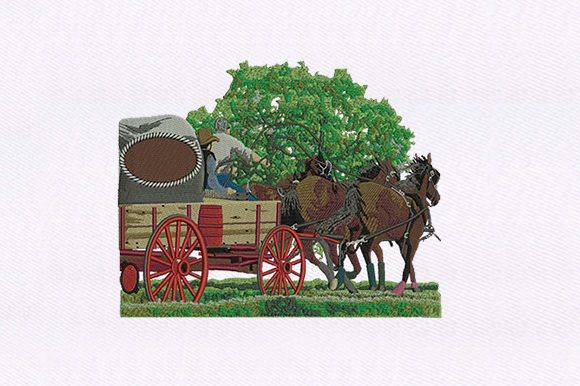
The Carriage Cowboys design carries a strong nostalgic feel. It captures a classic horse-drawn carriage with a Western mood that feels both rugged and refined. The detail level is noticeable right away. The stitch work includes layered fill stitches, satin stitch outlines, and subtle running stitch accents that give the carriage body and wheels a sense of depth. The horses are rendered with enough muscle definition to feel realistic, but the design does not stray into overly complex territory. It strikes a balance between decorative appeal and practical stitchability.
For an embroidery designer, that balance matters. A design that looks beautiful on screen but turns into a thread nest on fabric is not useful. Carriage Cowboys gives the impression of being carefully digitized, with attention to how the stitches will lay down on real material. The mood is appropriate for rustic, farmhouse, Western, and even vintage-inspired projects. It would not feel out of place on a piece of custom apparel for a ranch-themed event or as a decorative element on a handmade gift for someone who loves horseback riding or country living.
Real Project Performance
I tested Carriage Cowboys on a few different product types to see how it handled real embroidery conditions. The first project was a medium-weight cotton tote bag. The design stitched out cleanly on a stable fabric with minimal puckering. The satin stitch sections, particularly around the carriage wheels and the horse harness details, held their shape well. The fill stitch coverage was even, and I did not see any gaps or pull lines that sometimes appear with denser designs on lighter fabrics.
On a sweatshirt, the design performed slightly differently. The knit fabric required a good quality cutaway stabilizer and a light topping to keep the stitches from sinking into the fleece. The stitch density at 119,053 stitches means the design has substance, but it is not so dense that it turns fabric into a stiff plank. On the sweatshirt, the carriage motif sat nicely without distorting the stretch of the fabric. I would recommend a medium-weight tearaway or cutaway stabilizer depending on your fabric choice. For stretchy materials, a stabilizer with some extra hold is essential.
I also tested it on a kitchen towel. This is always a tricky surface for detailed embroidery because the fabric is textured and often loosely woven. The Carriage Cowboys design handled the towel better than I expected. The smaller details, like the spokes of the carriage wheels, remained legible. However, I would suggest using a water-soluble topping and a tight hoop to keep the fabric stable. The design is large enough at 8.00 by 6.37 inches that it makes a strong statement on a towel, but you need to be careful about placement so the entire motif sits on the usable area of the towel.
Practical Considerations for Small Hoops and Tiny Details
One of the first things I check when evaluating a new embroidery file is whether the design includes areas that might become problematic in small hoops or on curved surfaces. The Carriage Cowboys design is sized for an 8x10 hoop, which is a common size for many home embroiderers. If you are working with a smaller hoop, you will need to resize the design carefully. Resizing can affect stitch density and detail legibility, especially in the wheel spokes and the facial features of the horses. I recommend testing a scaled-down version on a scrap piece of fabric before committing to a final product.
For cap embroidery, this design is ambitious. The curvature of a cap front can distort a design that has a lot of horizontal width. The carriage and horses span a significant area, so you would need to position the design carefully and use a cap frame with good stability. I would not recommend it for standard caps unless you are experienced with cap embroidery and have a frame that can handle the size. A patch, on the other hand, is a great alternative. Stitching Carriage Cowboys as an embroidered patch on twill or felt gives you the freedom to place it on caps, bags, or jackets without worrying about fabric distortion.
Stitch Count and Thread Colors
At 119,053 stitches, this design is not a quick stitch-out. On a modern single-needle machine, you can expect a run time of around 30 to 45 minutes depending on your machine speed and thread changes. The design uses multiple thread colors, though the exact color stops are not specified in the description. I found that a classic combination of brown, black, cream, and a muted red for the carriage accents worked well. The satin stitch areas benefit from a high-quality thread with good sheen to make the details pop. If you are stitching on dark fabric, consider using a lighter thread color for the carriage outline to maintain contrast. On light fabric, dark brown or black outlines give the design a crisp, vintage look.
The stitch density is moderate overall. The fill sections are dense enough to provide good coverage without being heavy. The running stitch accents add texture without increasing the stitch count dramatically. I did notice that the densest areas are around the carriage wheels and the horse legs. These areas need careful attention during stitching. If you are using a thick or textured fabric, a layer of cutaway stabilizer will help prevent the stitches from pulling the fabric out of shape.
Commercial Use and Product Value
For anyone running an Etsy shop, selling at craft fairs, or producing custom apparel for clients, Carriage Cowboys offers good commercial potential. The design has a broad appeal for Western-themed products, baby showers with a rustic vibe, and personalized gifts for horse lovers. I can see it working well on a baby blanket as a framed center motif, on an apron for a country kitchen, or on a pillow cover for farmhouse decor. The design is large enough to be the main focal point of a product, which is helpful for handmade product photography. A well-stitched piece with this design photographs beautifully, especially when the thread colors contrast well with the fabric.
From a buyer trust perspective, a design that stitches out cleanly and looks professional on the finished product builds confidence with customers. If you are selling personalized gifts or boutique merchandise, the quality of your embroidery directly affects how your brand is perceived. Carriage Cowboys has the visual weight to feel like a premium design, and that translates into higher perceived value for your finished products.
Before you start selling items made with this design, double-check the licensing details on the Creative Fabrica product page. The description mentions ADDITIONAL D which may indicate specific terms for commercial use. Make sure you understand the license before using the design for products you intend to sell. This is a standard step for any digital embroidery file you download from Creative Fabrica, and it protects both you and the designer.
Embroidery Notes and Practical Tips
After working with Carriage Cowboys on several projects, I have a few practical notes that will help you get the best results.
- Test on scrap fabric first. Always stitch a test sample on a piece of fabric similar to your final product. This lets you check thread tension, color balance, and overall design integrity before committing to the actual item.
- Check thread color contrast. The design has layered details that can blend together if the thread colors are too similar. Use a color wheel or stitch a small sample to ensure the carriage and horses stand out against each other and against the background fabric.
- Review stitch density. With 119,053 stitches in an 8x10 hoop, the density is moderate. If you resize the design smaller, the density will increase, which may cause fabric puckering or thread breakage. If you resize larger, the density will decrease, which may leave gaps in the fill areas.
- Confirm hoop size. The design is optimized for a 8x10 hoop. If your hoop is smaller, you may need to rotate or adjust the design. Always check the dimensions before hooping your fabric.
- Use proper stabilizer. For stable woven fabrics, a medium-weight tearaway works well. For knits, stretchy fabrics, or loosely woven materials like towels, use a cutaway stabilizer with a light topping to keep the stitches crisp.
- Inspect small details after stitching. The wheel spokes and horse features are the most delicate parts of the design. After stitching, check these areas for any loose threads or skipped stitches. A quick trim and a light press with a pressing cloth can make the finished piece look polished.
- Compare light and dark fabric mockups. The design looks different on light versus dark backgrounds. On dark fabric, consider using a lighter thread for the carriage body to maintain visibility. On light fabric, a darker outline adds definition.
Final Thoughts on Carriage Cowboys
Carriage Cowboys is a solid machine embroidery design that fits well into a range of handmade products. It works for custom apparel, tote bag design, sweatshirt embroidery, kitchen towels, pillow covers, aprons, baby blankets, and even embroidered patch projects. The design has a classic Western feel that appeals to a broad customer base, and the stitch quality is good enough for commercial embroidery use.
The main considerations are the stitch count, which requires a moderate time investment, and the need for careful stabilizer selection on stretchy or textured fabrics. The hoop size is standard and manageable for most machines. If you are looking for a transportation-themed design that feels authentic and detailed without being overly complicated, Carriage Cowboys is worth adding to your design assets. It offers real value for Etsy sellers, small business owners, and apparel decorators who want to produce finished products that stand out in photos and on display.
As always, test before you invest in a full production run, and enjoy the process of bringing this classic carriage scene to life with thread and fabric.