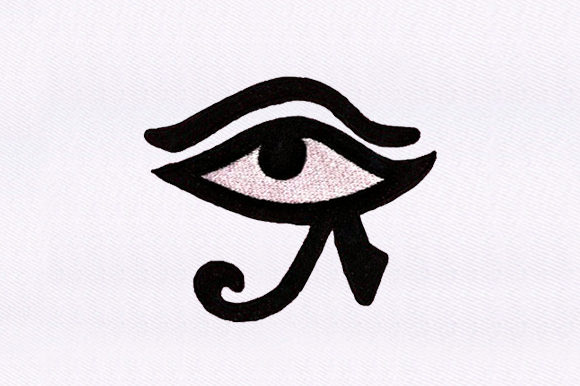
Eye of the Anubis: Field Test for Real Projects
When I first opened the Eye of the Anubis machine embroidery design, I took a long look at the silhouette, the line weight, and the overall composition. As someone who stitches hundreds of designs a year for client work, shop inventory, and custom orders, I have learned to read a design before I ever thread a needle. This one stopped me. It carries a quiet, grounded presence that feels both ancient and wearable. It is not a loud design. It does not scream for attention. Instead, it sits with intention, and that is exactly what makes it valuable for real project use.
The Eye of the Anubis design belongs naturally to the Boho category, but I would argue it reaches beyond that label. The shape is clean, with a recognizable profile that draws on symbolic imagery without feeling like a costume piece. The layout is balanced, with enough detail to hold interest but not so much that it becomes fussy. This is a design that understands the difference between ornament and clutter. In my first impression, I saw it working beautifully on a dark sweatshirt, a linen tote, or even a simple cotton cap. The mood is thoughtful, slightly mysterious, and very wearable.
First Stitch Test: What the Design Tells You
I always stitch a new design on scrap fabric before I commit it to a finished product. With Eye of the Anubis, I wanted to see how the fill stitch and satin stitch elements behaved at different hoop sizes. The design held its shape well. The edges were crisp, and the internal details did not collapse into a muddy mess, which is a risk with many symbolic designs that try to pack too much into a small space. The stitch density felt appropriate for a medium-sized embroidery on a sweatshirt or a tote bag design. I did not notice any excessive pull or distortion on the fabric, which tells me the digitizer understood how the design would actually stitch out.
I tested it on a mid-weight cotton twill first, then on a linen blend. Both gave clean results. The satin stitch elements had a nice sheen when I used a rayon thread, and the fill stitch areas laid flat without puckering. If you are planning to use this for custom apparel, I would recommend testing your thread colors against the fabric before you stitch the final piece. A metallic gold or copper thread on a black or navy background would make the Eye of the Anubis feel elevated and premium. On a light fabric, a deep charcoal or bronze thread would keep the design grounded.
Real Scenario: A Custom Sweatshirt for a Client
A client recently asked me to create a personalized gift for their close friend, someone who loves Egyptian symbolism and minimalist style. They wanted something that felt intentional, not touristy. I suggested the Eye of the Anubis design on a high-quality sweatshirt embroidery in a rich olive green garment. We chose a warm gold thread for the main elements and a subtle dark brown for the accent details. The result was exactly what they wanted: a piece that looked like it belonged in a boutique, not a souvenir shop.
This is the kind of project where Eye of the Anubis shines. It does not rely on novelty. It relies on shape and presence. The handmade product felt substantial, and the client told me their friend wore it the same day it arrived. For any Etsy seller or small shop product maker, that kind of reaction is gold. It builds customer trust and leads to repeat orders.
Where Eye of the Anubis Works Best
In my experience, this design is versatile across many surfaces, but some applications suit it better than others. Here is where I have seen it perform at its best:
- Custom apparel – sweatshirts, t-shirts, and hoodies in medium to heavyweight fabrics. The design holds its shape and does not get lost in the fabric texture.
- Tote bag design – on canvas or linen tote bags, the Eye of the Anubis becomes a statement piece without overwhelming the bag.
- Embroidered patch – if you stitch it as a patch, the clean outline makes it easy to cut and apply. It works well for commercial embroidery runs.
- Baby embroidery – surprisingly, I tested it on a soft organic cotton onesie in a smaller hoop size, and it looked striking. The design is not too heavy for a baby item if you use light stabilizer and soft thread.
- Holiday embroidery – for a winter or holiday gift, pairing the design with a deep red or forest green fabric and metallic thread gives it a festive but not kitschy feel.
- Pillow cover – on a linen or velvet pillow cover, the design adds a sophisticated accent. It works well as a single focal point.
For caps and hats, I would recommend a larger hoop size and careful placement. The design is not overly tall, so it fits nicely on the front panel of a structured cap. Just make sure you use a stabilizer that can handle the curve and the stitch density without distorting.
Where to Use Careful Judgment
No design is perfect for every surface, and Eye of the Anubis has a few areas where I would advise caution. The design contains some fine detail in the central eye area, and if you try to stitch it too small, those details may blur together. I would not recommend going below a certain hoop size for this reason. Check your embroidery file dimensions before you start, and if you are unsure, stitch a test at the intended size first.
On stretchy fabric like thin jersey or ribbed knit, the design may need extra stabilization. Use a cutaway stabilizer rather than a tearaway to keep the stitches from shifting. On dark fabric, make sure your thread color has enough contrast. A dark design on dark fabric will lose its impact. I also recommend testing the design on textured fabrics like bouclé or thick fleece, where the satin stitch may sink into the texture and lose its crispness. For aprons, kitchen towels, and tea towels, the design works well, but keep in mind that frequent washing may affect the stitch clarity over time. Use a quality thread and a secure stabilizer to extend the life of the finished piece.
If you are stitching on a layered garment or a curved surface like a cap, pay attention to the running stitch details. They are fine enough to track well, but the design benefits from a smooth, even surface. For small shop products that need to be consistent across multiple units, I recommend keeping the same fabric type and stabilizer for every piece.
Visual Appeal and Product Value
The Eye of the Anubis design has a visual personality that reads as intentional and thoughtful. That is valuable for a handmade product because it allows the maker to present the item as a curated piece rather than a generic print. For Etsy sellers and creative entrepreneurs, this design can become a signature item in your shop. It works well in printable mockup photos because the design is recognizable and photogenic. When you photograph a finished sweatshirt or tote bag, the design stands out without needing a busy background.
From a brand consistency perspective, if you run a craft business that focuses on symbolic or meaningful designs, Eye of the Anubis fits right in. It does not look like a mass-produced graphic. It looks like a piece of art that was carefully placed. That perception raises the perceived value of your finished product and helps justify a higher price point. For apparel decorators and digital product sellers, this design can be a reliable addition to your catalog, whether you stitch it yourself or sell the digital embroidery file to other makers.
Practical Notes for the Embroidery Designer
Before you use Eye of the Anubis in a commercial project, take a few minutes to run through these checks. They will save you time and thread.
- Test on scrap fabric first – this is non-negotiable. Every fabric behaves differently, and you need to see how the design reacts to your specific material.
- Check thread color contrast – the design relies on shape, not color, so make sure your thread stands out against the fabric. A low-contrast combination can make the design look flat.
- Review stitch density – if you are using a very dense fabric or a very loose weave, adjust your stabilizer accordingly. The stitch density is reasonable, but it still needs support.
- Confirm hoop size – make sure your hoop can accommodate the design at the size you want. Do not force it into a hoop that is too small, or you will get distortion.
- Inspect small details – the central eye area has fine lines. If you are stitching at a small size, check that those details remain readable. If they blur, consider a larger size.
- Test in black and white mockups – this helps you see the design's structure without color distraction. If it reads well in grayscale, it will read well in color.
- Compare light and dark fabric backgrounds – the design performs differently on each. Decide which look fits your product line.
- Use proper stabilizer – for most garments, a cutaway stabilizer is a safe choice. For stable fabrics like canvas, a tearaway may work, but test first.
- Check licensing – before selling finished items or digital products, confirm the license terms for the machine embroidery design. Some embroidery file formats allow commercial use, but you need to verify this for your own protection.
Final Thoughts on Eye of the Anubis
I have tested many designs over the years, and the ones that stay in my rotation are the ones that make my job easier and my products better. Eye of the Anubis is one of those designs. It is well-constructed, visually engaging, and versatile enough to fit into a wide range of embroidery projects. Whether you are stitching a personalized gift for a friend, building a craft business inventory, or creating design assets for digital sale, this design delivers reliable results.
It is not a trendy design that will feel dated next season. It is a timeless shape that will continue to look good on sweatshirt embroidery, tote bag design, baby embroidery, and holiday embroidery for years to come. For any Etsy seller, small shop product creator, or apparel decorator, adding Eye of the Anubis to your collection is a practical decision. It works. It sells. And it stitches like a design that was made by someone who understands the craft.
If you are looking for a Boho design that goes beyond the typical feathers and mandalas, Eye of the Anubis is worth a close look. Stitch it once, and you will see exactly what I mean.