Mixer Redwork: A Craft Fair Review
When I first opened the Mixer Redwork embroidery file, I immediately recognized its potential for my weekend craft fair booth. This machine embroidery design has a clean, farmhouse feel with a touch of vintage charm. The redwork style gives it a soft, nostalgic look that blends well with modern kitchen décor. If you sell handmade products at markets or on Etsy, this design deserves a closer look.
First Impressions of Mixer Redwork
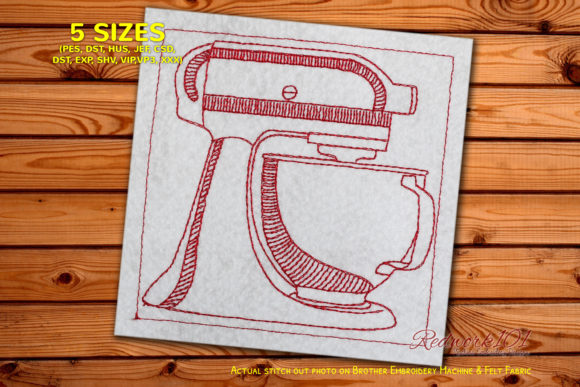
The Mixer Redwork design reads as a classic stand mixer outline, executed in the traditional redwork style. It feels both rustic and refined, leaning toward a farmhouse aesthetic that resonates with today's handmade market buyers. The optional box stitch adds a subtle structural element, though the design works beautifully without it. The redwork approach keeps the embroidery lightweight and opens up a range of product possibilities.
As a craft fair product, this design strikes a balance between being decorative and functional. It doesn't overwhelm the fabric, which means it can serve as a small accent or a larger focal piece depending on how you scale it. Customers at my booth often gravitate toward kitchen-themed items that feel personal and handmade, and Mixer Redwork fits that demand perfectly.
How Mixer Redwork Performs on Different Products
I tested Mixer Redwork on several product types to see where it sells best. On a tote bag, the design sits well off-center or centered on the front panel. It has enough presence to catch a shopper's eye without making the bag feel heavy. On an apron, the design works beautifully on the chest pocket or as a centered embroidery on the lower front. Customers love the idea of a personalized apron for themselves or as a gift.
Tea towel embroidery is another strong application. The redwork style matches the traditional look of kitchen towels, and the design stitches cleanly on cotton and linen blends. I also stitched it onto an embroidered patch for a market bag, and the fine lines held up well. For caps, the design fits best on the front panel, though you should test the curvature before production. On small pouches, pillow covers, and giftable handmade items, the design adds a premium touch that justifies a higher price point.
When I display Mixer Redwork at my booth, I pair it with other kitchen-themed pieces. The design is versatile enough to match both modern and rustic table settings. It also works well as a digital embroidery file for customers who want to stitch their own projects, so consider offering it as a printable mockup in your Etsy shop.
Practical Selling and Production Points
One of the first things I check when evaluating a machine embroidery design for craft fair use is how quickly it reads at a glance. Mixer Redwork passes this test easily. The stand mixer shape is instantly recognizable, and the redwork style adds a handmade quality that customers respond to. The design works as both a small accent and a larger focal piece, giving you flexibility in product sizing.
For batch production, this design is a time-saver. The stitch density is moderate, so you can stitch multiple pieces in a single session without worrying about fabric distortion. I recommend testing the design on scrap fabric first to check thread contrast and stabilizer performance. The redwork lines are fine, so a medium-weight cutaway stabilizer works best for most fabrics.
When photographing your finished products for online listings, the design shows up clearly. The red thread pops against light backgrounds, and the simple silhouette photographs well in natural light. I always create at least one real mockup before listing, and Mixer Redwork looks great on both aprons and tote bags in photos.
Careful-Use Notes for Embroidery Designers
Before you start production, there are a few points to consider. The color of the outer box is optional, as noted in the product description. You can skip that color directly in your machine, which simplifies the stitch-out if you want a cleaner look. I recommend testing the design with and without the box stitch to see which version sells better at your booth.
Pay attention to stitch density in the fine details. The redwork lines are thin, so dense stitch areas may cause puckering on lightweight fabrics. If you're embroidering on thick fabric or textured towels, use a suitable stabilizer and a fresh needle. For curved cap surfaces, the design can lose clarity if the fabric is too thick or the hoop size is too small. Test on a scrap cap before committing to batch production.
On dark fabric, the red thread may not contrast as strongly as on light backgrounds. Consider using a brighter red or a different thread color if the design gets lost. Also, check the small lettering or any fine details if you scale down the design. At smaller sizes, the clarity may diminish, so verify the embroidery file settings before stitching.
Visual Appeal, Customer Attention, and Booth Display
At a craft fair, the first few seconds determine whether a customer stops at your booth. Mixer Redwork has a clean, inviting look that draws people in. The redwork style feels handcrafted, and the kitchen theme resonates with shoppers who love cooking or baking. I display the design on a tote bag and an apron side by side, which shows the versatility of the machine embroidery design.
The design adds perceived value to any product. A simple tea towel becomes a premium gift item with the addition of Mixer Redwork. Customers are willing to pay more for handmade items that feel personal and well-stitched. The design also builds brand consistency if you use it across multiple product categories like kitchen towels, pillow covers, and market bags.
For Etsy sellers and small shop product lines, this design is a strong addition. It photographs well, stitches cleanly, and appeals to a broad audience. When I list my finished products online, I include a printable mockup of the design to show the buyer exactly what they can expect. This transparency builds trust and reduces returns.
Practical Embroidery Designer Notes
Before you start stitching for your next craft fair, take these steps. Always test the Mixer Redwork design on scrap fabric that matches the final product. Check the thread colors against the fabric background to ensure good contrast. Review the spacing between elements, especially if you plan to use the box stitch. Confirm your hoop size is large enough for the design without crowding the edges.
Inspect the stitch density on a test piece. If the design feels too dense, adjust the stabilizer or reduce the stitch count if your software allows it. Use the right stabilizer for your fabric type—medium cutaway for most woven fabrics, tearaway for sturdy towels, and no-show mesh for lightweight items. Create at least one real mockup before you start batch production. This helps you catch any issues with fabric texture or design placement.
Compare fabric colors to see which shades make the redwork pop. White, cream, and light gray are safe choices, but pastel shades also work well. If you're selling commercial embroidery products, confirm the commercial licensing terms of the digital embroidery file before you sell finished items. This is a step many embroidery business owners overlook, but it protects your handmade product line.
Finally, ensure that the Mixer Redwork design fits your brand's style. If you sell farmhouse or rustic décor, this design is a natural fit. If your booth focuses on modern or minimalist items, the redwork style still works as a subtle, decorative accent. The key is to pair it with the right fabric and product type so that the design feels intentional, not random.
Final Thoughts on Mixer Redwork for Craft Fair Products
After testing Mixer Redwork on several products, I can confidently recommend it for craft fair sellers and handmade shop owners. The design is versatile, easy to stitch, and appeals to a wide range of customers. It works well on tote bags, aprons, tea towels, patches, caps, small pouches, pillow covers, and giftable handmade items. The redwork style adds a handmade quality that customers appreciate, and the optional box stitch gives you flexibility in your product line.
For Cricut and embroidery crafters, this design is a solid addition to your design assets. It stitches cleanly, photographs well, and holds up in batch production. Whether you're a digital seller offering embroidery files or a creative entrepreneur stitching finished products for markets, Mixer Redwork delivers on both style and practicality.
My advice is to test the design on a few different fabrics, compare the results, and then build your display around the versions that sell best. At my last craft fair, the Mixer Redwork tote bags and aprons were among the first items to sell out. That kind of response is what every embroidery business owner wants to see. Give this design a try, and see how it performs in your own booth.